
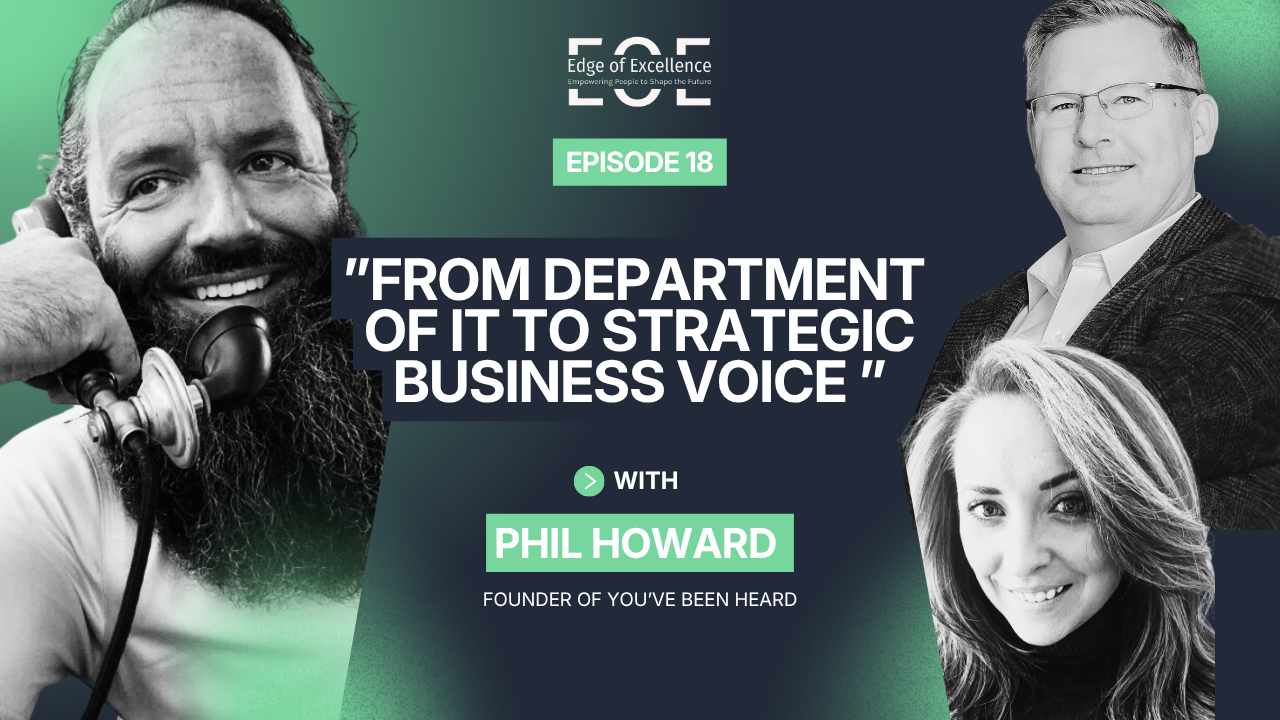

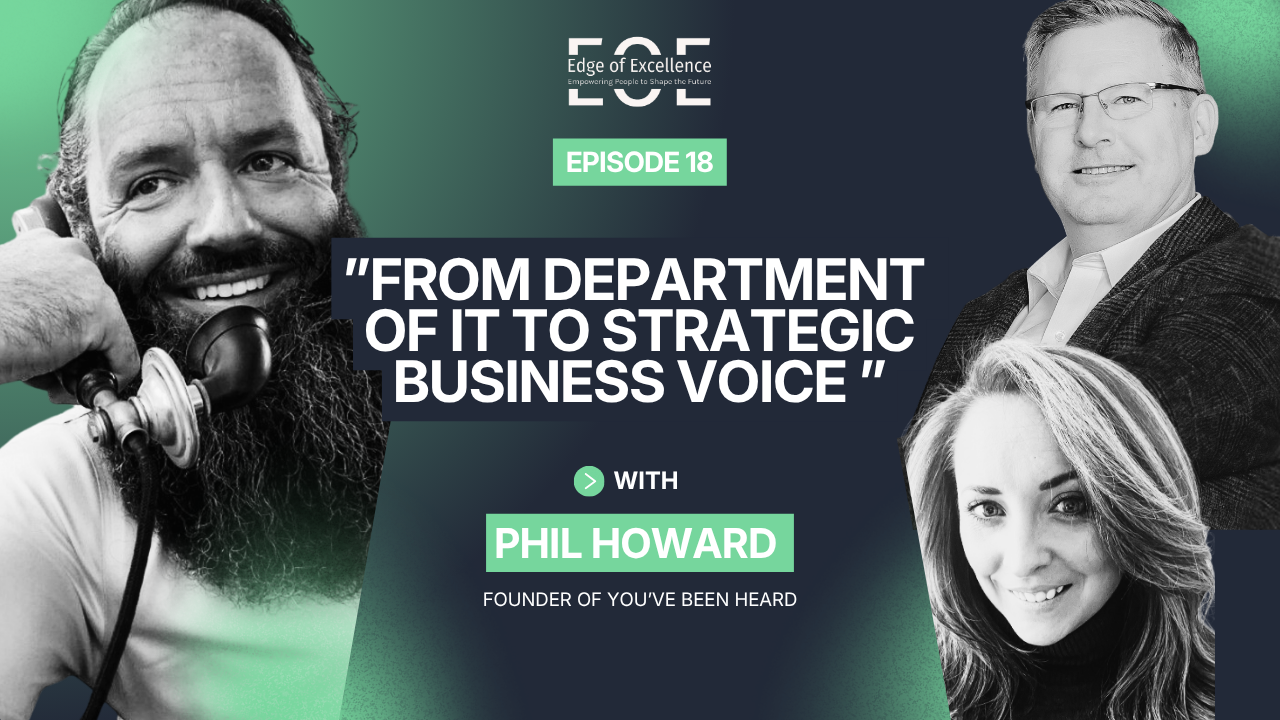
Click here to listen now: From Department of IT to Strategic Business Voice
Having a Seat at the Table Is Not the Same as Being Heard
For years, IT leaders fought for a seat at the executive table.
In many organizations, they now have it.
The CIO, CTO, VP of IT, or IT Director is invited to the leadership meeting. They are included in budget conversations. They are asked about risk, security, cloud, vendors, systems, and AI. They may even be responsible for some of the most business-critical decisions the company makes, but being in the room is not the same as being heard.
Many IT leaders still face the same frustrating pattern:
-
When systems break, IT becomes urgent.
-
When systems work, IT becomes invisible.
-
When budgets tighten, IT becomes a cost center.
-
When vendors pitch leadership directly, IT gets pulled in too late.
-
When technical leaders raise concerns, they may be seen as blocking progress instead of protecting the business.
That gap between technical truth and executive understanding is one of the biggest challenges facing modern IT leadership.
The issue is not that IT leaders lack knowledge, in many cases, they understand the complexity of the business better than almost anyone. They see the systems, the dependencies, the risks, the workarounds, the vendor promises, the security gaps, and the technical debt.
The problem is that technical truth does not always move people, business language does.
Why IT Leaders Struggle to Be Heard
IT leaders often live in two worlds at once.
They have to understand infrastructure, security, applications, networks, cloud platforms, Microsoft environments, vendors, contracts, compliance, user experience, support, and emerging tools like AI.
At the same time, they have to communicate with executives who may be focused on revenue, margin, growth, acquisition, customer experience, risk, operational efficiency, or board pressure.
That translation layer is where many IT conversations break down.
An IT leader may say:
“We need to invest in zero trust.”
An executive may hear:
“This sounds expensive, technical, and disruptive.”
An IT leader may say:
“This ERP implementation timeline is unrealistic.”
An executive may hear:
“IT is slowing us down again.”
An IT leader may say:
“This vendor’s proposal does not integrate well with our current environment.”
An executive may hear:
“IT does not want change.”
The technology leader may be right, but being right is not enough.
If the business does not understand the risk, value, tradeoff, cost, or outcome behind the recommendation, the message can land as resistance.
That is when IT leaders get labeled as too technical, too cautious, too negative, or too disconnected from the business.
The “Department of IT” Problem
One of the most damaging ideas inside a business is that IT is a separate department responsible only for keeping systems running.
That mindset creates distance. It turns technology into a service window instead of a strategic function. It makes IT reactive. It encourages executives to bring IT in after decisions have already been made. It positions technology leaders as implementers instead of advisors.
This is how organizations end up with conversations like:
“We already signed the contract. Can you implement this by March?”
“We picked the platform. Can you make it work?”
“We promised the client. Can you secure it?”
“We need an AI strategy. Can you figure that out?”
“We are moving to the cloud. Can you handle the migration?”
By the time IT is included, the biggest decision may already be over, which is not strategic alignment, it's cleanup.
A healthier model brings IT into the decision earlier, before the contract is signed, before the timeline is promised, before the vendor narrative becomes the internal plan, and before the business commits to a direction that may be expensive, risky, or misaligned.
IT Is Either Invisible or in Trouble
Many technology teams live inside a painful paradox.
When everything works, no one notices.
Employees can access files. Email sends. Phones work. Meetings connect. Applications load. Cybersecurity tools run in the background. Backups complete. The network stays stable. The business moves.
Because nothing is on fire, leadership may underestimate the effort, planning, and risk management required to keep it that way.
Then something breaks.
A system goes down. A phishing attempt succeeds. A vendor outage affects operations. A migration gets messy. A security tool blocks a workflow. A platform does not integrate. A customer-facing issue appears.
Suddenly, IT is highly visible, but now the visibility is tied to frustration.
This creates a leadership challenge for CIOs, CTOs, IT Directors, and VPs of IT. They need to make the value of prevention visible before failure makes IT visible for them.
That means communicating what is being protected, not just what is being maintained.
How IT Leaders Can Translate Technology Into Business Outcomes
The strongest IT leaders explain what the technology enables, protects, reduces, accelerates, or prevents.
That shift changes the conversation. Instead of saying:
“We need better endpoint management.”
Say:
“We need stronger device visibility so we can reduce security exposure, support remote employees more effectively, and offboard users without leaving company data behind.”
Instead of saying:
“We need to replace the firewall.”
Say:
“Our current firewall is increasing operational risk. Replacing it will improve resilience, reduce support burden, and give us better protection as the business grows.”
Instead of saying:
“We need to review our Microsoft agreements.”
Say:
“We may be overspending, underusing licenses, or missing security capabilities we already pay for. A review could reduce cost and improve control.”
Instead of saying:
“We need SD-WAN.”
Say:
“We need more reliable connectivity across locations so employees can work consistently, outages create less disruption, and the network can support where the business is headed.”
The technical recommendation matters, but the business impact is what earns attention.
A Simple Translation Framework for IT Leaders
When preparing to present a technology recommendation, IT leaders can use this structure:
1. Business Problem
What business issue are we trying to solve?
Examples:
- Employees are losing time because systems are unreliable.
- Vendor costs are rising without clear value.
- Security risk is increasing as the company grows.
- Customer experience depends on systems that are aging.
- Teams are adopting tools without governance.
- Leadership lacks visibility into risk.
2. Current Risk
What happens if we do nothing?
Examples:
- Downtime becomes more likely.
- Costs continue to rise.
- Compliance exposure increases.
- Employees create more workarounds.
- Security gaps remain unaddressed.
- Future projects become harder.
3. Recommended Path
What decision should the business make?
Keep this clear and concise. Avoid drowning the recommendation in technical detail unless the audience asks for it.
4. Business Outcome
What improves if the company acts?
Examples:
- Lower cost
- Better resilience
- Stronger security
- Faster onboarding
- Improved customer experience
- Reduced operational risk
- Better vendor control
- More scalable infrastructure
5. Tradeoffs
What will this require?
Executives do not need every technical detail, but they do need to understand cost, timing, disruption, dependencies, and consequences.
6. Decision Needed
What does leadership need to approve, decide, or prioritize?
Do not end with information, end with a clear decision.
The Vendor Noise Problem
Technology leaders are not the only people trying to influence executive decisions.
Vendors are also in the room, even when they are not physically present.
Executives are exposed to sales decks, analyst reports, peer recommendations, conference buzz, AI hype, cybersecurity fear, platform promises, and vendor claims that every solution is the best fit.
That noise makes IT decision-making harder.
A vendor may present a compelling story, but that story may not account for the company’s existing environment, staffing capacity, budget, risk profile, integration needs, support model, compliance requirements, or long-term roadmap.
This is where IT leadership becomes essential. The goal is to separate useful solutions from expensive distractions.
A strong IT leader helps the business ask:
- What problem are we actually solving?
- Does this platform fit our environment?
- What will implementation really require?
- Who will manage it after launch?
- What does this replace?
- What does this duplicate?
- What risks does it introduce?
- What is the full cost beyond the contract?
- What happens if we do not move forward?
- What happens if we choose the wrong vendor?
Without that discipline, companies can end up with tools they do not need, platforms they cannot support, contracts they cannot justify, or implementations that create more complexity than value.
What Makes an IT Decision Defensible?
A defensible IT decision is not just a decision that sounds good in a meeting.
It is a decision the company can explain later.
To the CFO.
To the board.
To employees.
To auditors.
To customers.
To future leadership.
To itself six months after the invoice arrives.
A defensible decision has clear reasoning behind it. It connects to a business problem. It accounts for risk. It considers alternatives. It evaluates cost. It acknowledges tradeoffs. It is not driven entirely by vendor pressure, urgency, fear, or executive preference.
Defensible IT decisions usually include:
- A clearly defined business need
- Documented options
- Cost comparison
- Risk assessment
- Implementation requirements
- Integration considerations
- Security review
- Support model
- Ownership after launch
- Success metrics
- A clear explanation of why this path was chosen
This does not mean every decision needs a massive report, but it does mean technology choices should be made with enough clarity that the business can stand behind them.
Why Mid-Market IT Leaders Carry a Unique Burden
Mid-market IT leaders often face enterprise-level complexity without enterprise-level resources.
They may manage security, cloud, telecom, vendors, Microsoft environments, help desk, compliance, infrastructure, networking, user support, executive requests, and strategic projects with a lean team.
They are expected to be technical experts, business advisors, project managers, budget defenders, vendor negotiators, security leaders, and people managers.
That is a lot of weight.
The challenge is both workload and context switching.
One hour, they may be dealing with a user issue.
The next, they may be reviewing a vendor contract.
Then they are pulled into a cybersecurity concern.
Then an executive asks about AI.
Then a location has a network issue.
Then finance wants budget clarity.
Then a department wants a new application approved.
This is why communication and prioritization become just as important as technical skill.
The IT leader who tries to carry everything as a technical problem eventually gets buried. The IT leader who can frame priorities in business terms has a better chance of getting the support, budget, and alignment needed to lead well.
Executive Buy-In Starts Before the Big Ask
Many IT leaders wait until they need approval to start communicating value.
That is too late.
Executive trust is built before the budget request, before the renewal, before the incident, before the migration, and before the uncomfortable recommendation.
IT leaders can build that trust by creating regular, useful conversations with other leaders.
For example, an IT leader can ask the CFO:
“What is your biggest frustration, concern, or unknown when it comes to technology spend?”
They can ask the COO:
“Where do systems or processes slow the business down?”
They can ask the CEO:
“What technology risks or opportunities are most connected to the company’s next stage of growth?”
They can ask department leaders:
“What workarounds has your team created because the current tools do not support how you work?”
These conversations help IT leaders understand what matters to the business before making recommendations. They also change the way other leaders experience IT.
IT becomes less of a service department and more of a thinking partner.
How IT Leaders Can Build Stronger Internal Influence
IT influence does not come only from technical expertise.
It comes from trust, clarity, consistency, and relevance.
Here are practical ways IT leaders can become more heard inside the business:
1. Learn the language of the business
IT leaders do not need to become CFOs, but they do need to understand the financial and operational terms that shape executive decisions.
That includes concepts like:
- Revenue impact
- Margin
- EBITDA
- Customer acquisition cost
- Retention
- Operational efficiency
- Risk exposure
- Key person risk
- Compliance impact
- Cost avoidance
- Productivity loss
- Business continuity
The more fluently IT can connect technology to these ideas, the easier it becomes for executives to understand the recommendation.
2. Stop leading with the tool
The tool is rarely the best opening.
Start with the problem, the risk, or the outcome.
Then explain the tool as the path to solve it.
3. Make prevention visible
If IT only reports on tickets, outages, and projects, leadership may miss the value of prevention.
Show what did not happen because the right controls, monitoring, planning, or maintenance were in place.
4. Build relationships before conflict
If the first deep conversation with a business leader happens during a disagreement, the IT leader is already at a disadvantage.
Regular conversations make hard decisions easier.
5. Bring options, not just objections
When IT says “no,” it can sound like resistance.
When IT says, “Here are three ways to get the outcome safely,” it sounds like leadership.
6. Tie recommendations to business timing
A project may be technically important, but timing still matters. Connect recommendations to business events: growth, renewal dates, compliance deadlines, customer needs, acquisitions, funding, hiring, or operational strain.
7. Use stories and examples
Executives remember stories better than abstract risks.
Show what the risk looks like in practice. Explain what could happen. Describe the cost of waiting. Use examples that connect to real business pressure.
Vendor-Neutral Advisory and the Value of a Clear Second Opinion
Sometimes IT leaders need outside support not because they lack ability, but because the decision environment is too noisy.
Vendor-neutral advisory can help leadership teams compare options, pressure-test proposals, evaluate costs, and separate sales narratives from business fit.
This can be especially useful when decisions involve:
- Telecom
- Network redesign
- Cloud services
- Microsoft licensing
- Cybersecurity tools
- ERP systems
- AI platforms
- Managed services
- Multi-location infrastructure
- Contract renewals
- Complex vendor proposals
A strong advisor helps the business make a cleaner decision.
They ask better questions. They identify hidden incentives. They compare options fairly. They clarify tradeoffs. They help leadership understand what is actually being purchased, what problem it solves, and what risks remain.
For IT leaders, that outside perspective can also create support when internal recommendations are being challenged by aggressive vendor messaging or executive pressure.
Questions Executives Should Ask Their IT Leaders
Executives who want IT to become more strategic should create space for better conversations.
Here are questions that can help:
- What technology decisions are we making too late?
- Where are vendors influencing us before IT has evaluated the business fit?
- What risks are you most concerned about that leadership may not fully see?
- What tools or contracts are we paying for that may be duplicative or underused?
- Where is technical debt slowing us down?
- What would you change if you were planning for the company we want to become in three years?
- What technology investments would reduce operational risk?
- Where are teams creating workarounds because systems are not supporting them?
- What should we stop doing?
- What decisions do you need to be included in earlier?
These questions help IT move from reactive support to strategic guidance.
Questions IT Leaders Should Ask Executives
IT leaders can also create better alignment by asking stronger business questions.
For example:
- What are the company’s most important goals this year?
- What operational problems are slowing growth?
- What risks are most concerning to the board or leadership team?
- Where do you believe technology is helping the business?
- Where do you believe technology is getting in the way?
- What financial pressures should IT understand before making recommendations?
- What customer promises depend on technology working well?
- What upcoming decisions should IT be involved in early?
- What does success look like from your perspective?
- What do you need from IT that you are not currently getting?
These questions reposition IT as a business partner. They also help the IT leader avoid building a technology strategy in isolation.
The Real Goal: From Cost Center to Business Force Multiplier
IT becomes easier to dismiss as a cost center when its value is only described in technical terms.
But technology is not just infrastructure.
It affects how people work.
How customers are served.
How risk is managed.
How data is protected.
How fast teams can move.
How confidently leaders can make decisions.
How resilient the business is when something goes wrong.
How effectively the company can grow, adapt, and compete.
That is the strategic value of IT.
The companies that understand this bring technology leaders into business conversations early. The IT leaders who understand this learn to communicate in the language of outcomes.
That is where the shift happens.
Technology Leaders Do Not Just Need a Seat. They Need a Voice.
Modern IT leadership is not only about tools, contracts, systems, or infrastructure.
It is about communication.
Trust.
Timing.
Translation.
Decision-making.
Business alignment.
Knowing when to push, when to listen, and how to make technical truth understandable to the people responsible for the future of the company.
For IT leaders, the opportunity is to become more than the department that keeps things running.
For executives, the opportunity is to stop treating technology as something to review after the business decision has already been made.
The strongest organizations bring those worlds together early.
When IT leaders are truly heard, technology stops being background noise and becomes part of how the business protects value, reduces risk, serves customers, and moves forward with confidence.
Listen to the full Edge of Excellence episode with Phil Howard to hear more about IT leadership, executive buy-in, vendor noise, defensible technology decisions, and what it takes for technology leaders to become strategic business voices.
Need help connecting technology decisions to business outcomes? Talk with iuvo about strategic IT consulting, advisory support, and building a clearer path from IT complexity to business value.
Subscribe to Edge of Excellence and visit iuvotech.com to learn more.
How We Create Our Content
As a future-ready technology company, we embrace AI as an accelerator to empower our teams and enhance the way we create. We believe that the reliability of AI technology depends on the people behind it, which is why every blog is supported by AI tools and then carefully reviewed, validated, and enriched by our subject matter experts. This balance enables and empowers our team to produce content that is useful, accurate, and trustworthy for our readers.

-2.png)